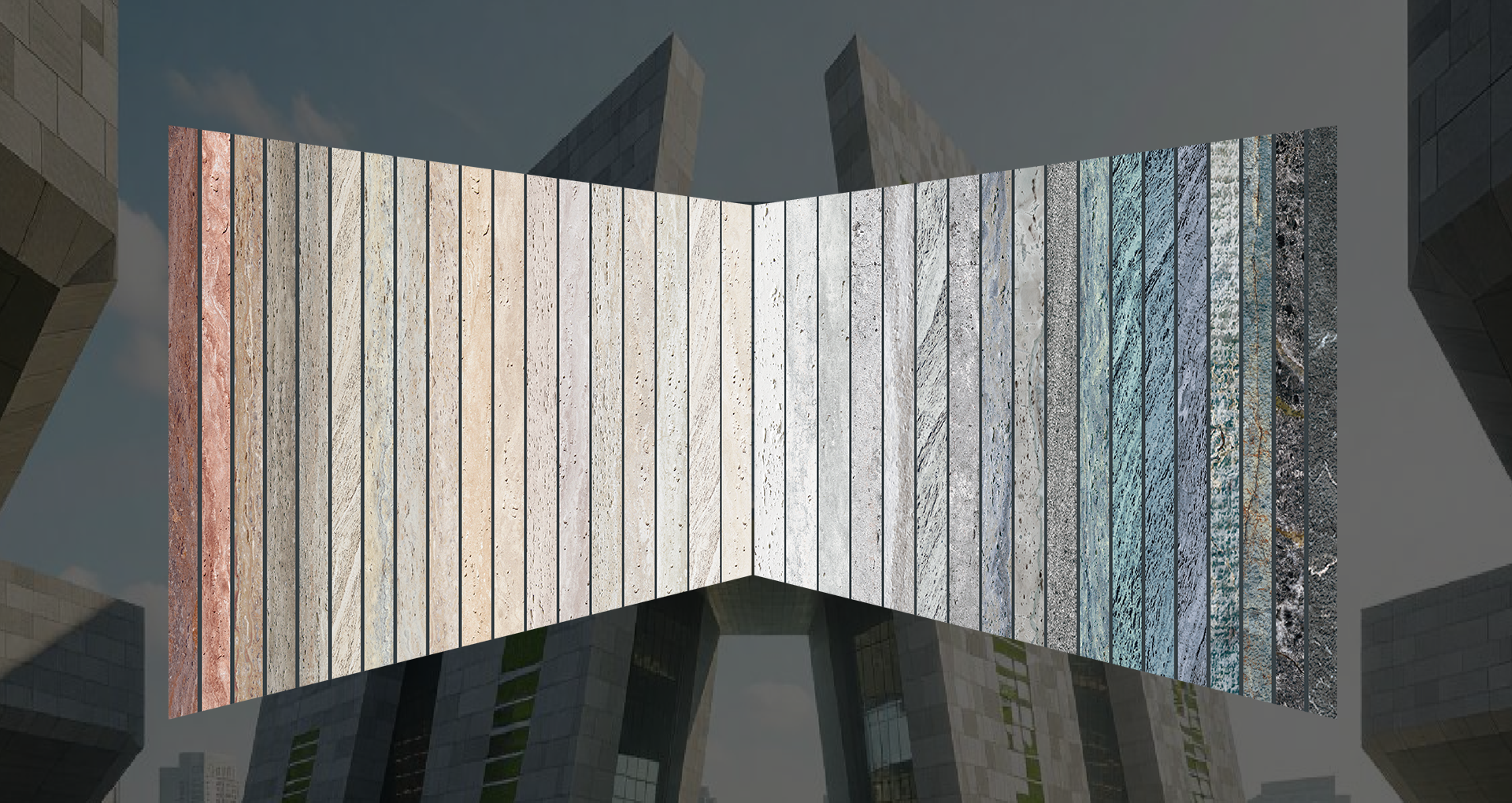
PHOMI presented the eBIPV (Building Integrated Photovoltaic) solar facade system to an international audience at CES Las Vegas in January 2026. The product integrates photovoltaic generation into eCoverings panels without compromising the natural stone, wood, or brick aesthetic — representing the commercial launch of a technology in development since 2021.
What distinguishes eBIPV
Standard BIPV products — solar roof tiles, glass facade panels, and thin-film cladding — share a common limitation: they look like solar products. Aesthetic integration has been the unsolved challenge for architects who want to meet on-site energy generation targets without visible solar installations altering the building's visual character.
eBIPV resolves this by fusing econiclay texture panels with photovoltaic cell arrays beneath the surface. The result is a facade element that generates electricity while presenting the surface texture of stone, slate, or timber to the exterior. The photovoltaic substrate is not visible.
Launch specifications
The launch specification for eBIPV panels: maximum power output 126.91 W per panel, module efficiency 17.63%, panel weight 6.4 kg, dimensions 1200×600×30 mm, fire rating Class A, no glass, aluminium honeycomb composite panel backing, IP68 junction box. TUV and UL certified. Warranty: 25 years, with 90% efficiency retained at year 12 and 80% at year 25.
The system is compatible with standard facade mounting hardware and can be connected to building management systems for real-time generation monitoring.
Market context
Building regulations in the EU, UK, and several GCC markets are progressively requiring on-site renewable energy generation for new commercial buildings above certain floor areas. eBIPV positions PHOMI to address these requirements through the facade specification workflow — rather than requiring architects to accommodate separate solar installations into their designs.